Papermaking in Dover: How paper was made and the risks involved
Welcome to blog post number 10 on the subject of papermaking in Dover, an important topic given the title of the book.
Writing historical fiction involves a lot of research which informs the story but is not necessarily included in it. This blog is for sharing some of the interesting and fun facts I discovered while researching my novels.
The History of Buckland Mill
Papermaking was a flourishing industry in Dover during the 18th and 19th centuries. At its height there were no less than six papermills along the River Dour, at Bushy Ruff, River, Crabble, Lower Buckland and Charlton Green. I have based the papermill in The Papermaker’s Daughter on Buckland Mill which was the largest and longest surviving. There is evidence of its existence as early as the late 17th century, though at that time it was a very small establishment where paper was made by hand and employed only a handful of people. This mill burnt down and was rebuilt in 1814.
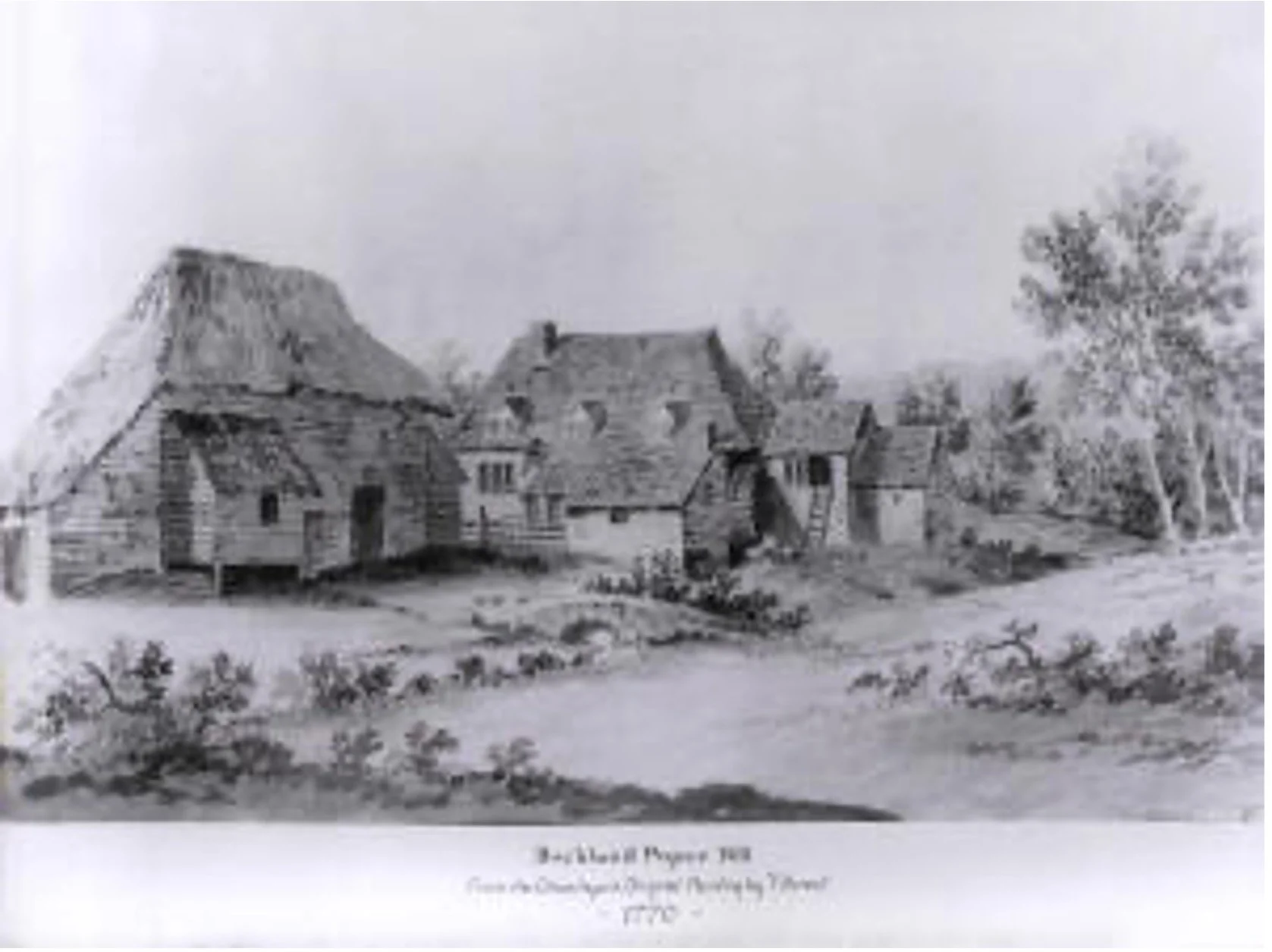
An early picture of Buckland Mill in the late 1700s
A plan of the mill in 1822 shows that it was a two storey building, part brick and part wooden, with a tarred paper roof. There was a beater room where boiled rags were beaten to a pulp, and drying lofts where the wet paper was left to dry out, as well as a counting house, the equivalent of a modern office or accounts department. The plan shows a vacant site marked for the erection of an open tank for boiling rags. It is unclear where the rags were boiled in the meantime.
The Process
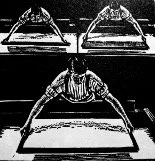
Papermaking at this time was a laborious affair. It was made by hand, one sheet at a time, by dipping a framed sieve into the boiled rag-pulp. Once the water had drained, the sheet of paper was removed from the sieve and hung up to dry thoroughly. It was a slow process and the size of the sheet of paper was limited to the size of sieve a man could handle.
Mechanisation
Towards the end of the 18th century, a Frenchman, Nicholas-Louis Robert, invented a machine which mechanised the process by passing a continuous flow of pulp along a moving belt to a pair of rollers which squeezed out the water, thus producing a sheet of paper of indefinite length. It still had to be collected manually and hung up to dry before being cut, but it sped up the process considerably. Sometime around 1830, the latest version of this type of paper-making machine, known as a Fourdrinier, was installed at Buckland Mill.
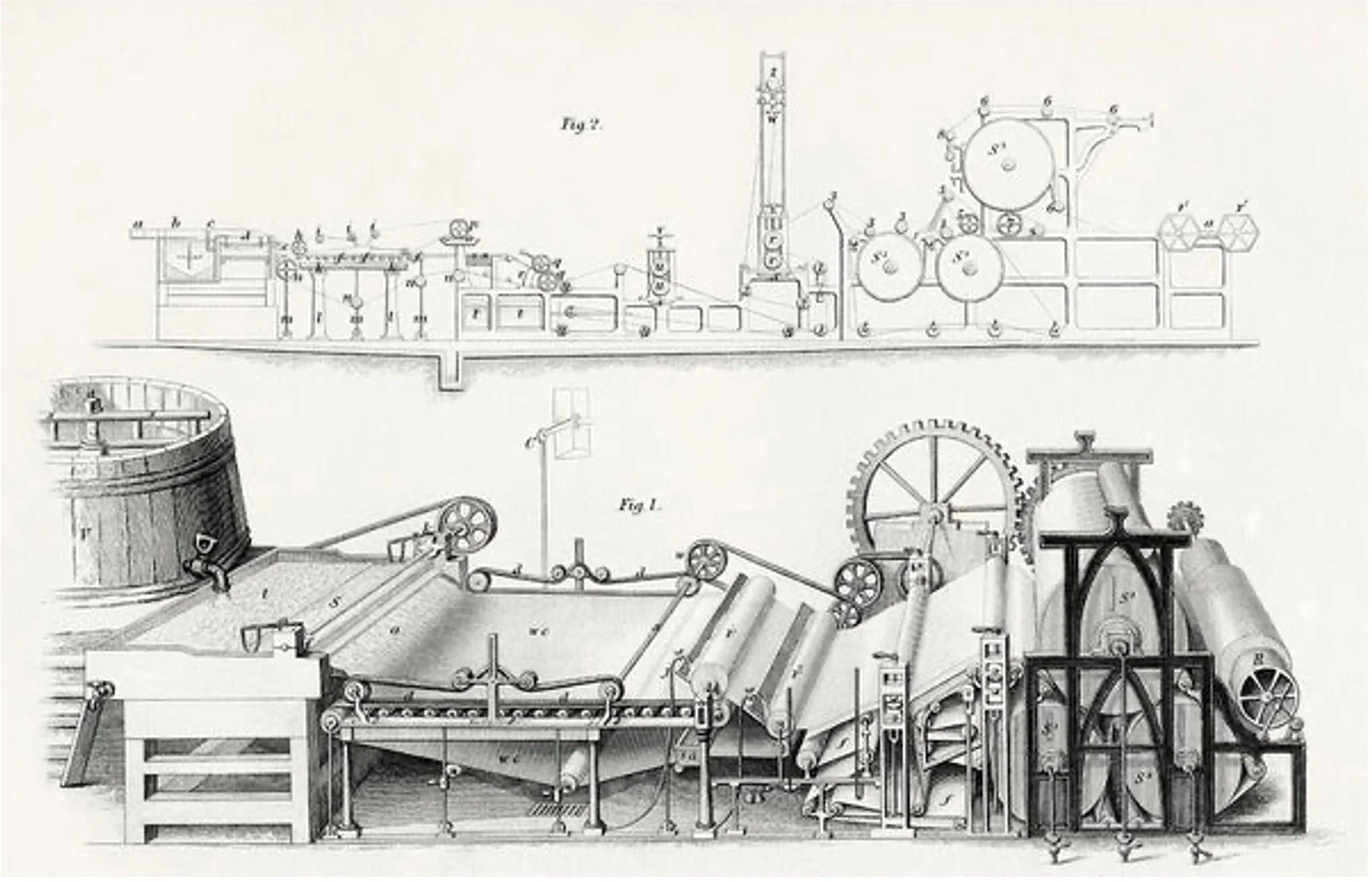
In 1887, Buckland Mill was again destroyed by fire but immediately rebuilt and remodelled resulting in an increase in output from 3 to 12 tons per week. A spherical rotating rag boiler was installed at this time, replacing the open tanks. In 1888, it began producing Conqueror, the best known watermarked paper in the world, its premier brand for 112 years.
The Workforce
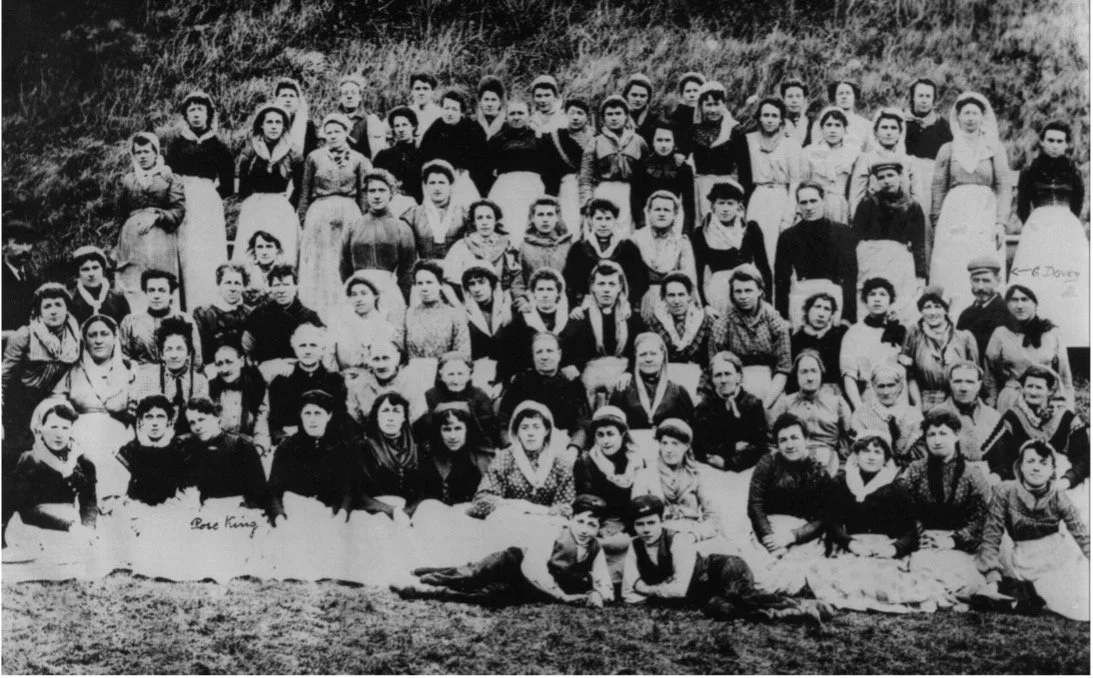
Rag sorters in 1897 – The vast majority were women
The papermaking industry employed many women who were used to sort linen or cotton rags into piles and remove any impurities such as buttons and pins. In The Papermaker’s Daughter, Elizabeth lives among the female mill workers though is unable to form friendships because of the difference in their status.
On their return, a woman emerged from the cottage at the end of the row, a baby tied to her back with a shawl, and a shabby-looking wicker basket on her arm. Elizabeth waited for her to draw near and gave her a friendly smile.
‘Good morning, I’m Mrs Crouch. Pleased to make your acquaintance.’
‘Oh, I knows who you are. We all do in the row.’ She curtsied, looking worried. ‘Mary Talbot. Please don’t tell your husband. I should be at the mill, but the baby’s sick. Got to get more Godfrey’s Cordial.’ She glanced behind before curtseying to Elizabeth again. ‘Good day to you, ma’am.’
She hurried away. Elizabeth had been about to offer help, but got the distinctimpression Mary Talbot would not welcome it. This first encounter with a neighbour was hardly warm and friendly.
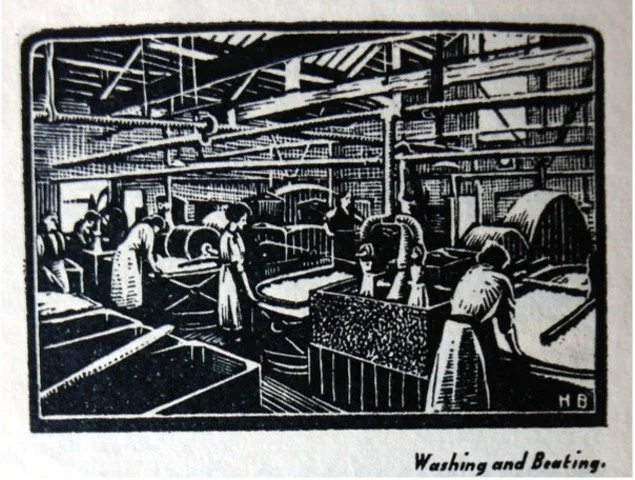
Women were also employed for washing the rags and beating them into pulp. At the turn of the 20th century, over 200 people were employed in the specialised sorting and finishing work at the mill, the vast majority of them women.
From Rags To Wood Pulp
The industry changed significantly in the 1840s when wood-pulp began to replace rags as the raw material. Initially, wood pulp was mixed with rag pulp but by the 1850s rising demand for paper, driven in part by the establishment of municipal libraries (see my blog post on Libraries), and by the repeal of the newspaper tax in 1850, led to a severe shortage of cotton and linen rags.
In The Papermaker’s Daughter, Alfred Kesby explains to Elizabeth the reason why his father’s business fell into decline:
He sighed deeply. ‘I had no choice. I was not free to choose my wife. My father presented me with a stark choice: marry Edith Johnson or face ruin. A month later, he died from heart failure, the sale of his assets barely covering his debts. Edith’s hefty dowry secured my future and funded my mother’s retirement to her ancestral home in Lucca.’
‘I see. But why was your father facing ruin?’
Alfred shrugged. ‘Complacency, short-sightedness. Failure to foresee the introduction of cheap wood pulp would revolutionise the industry, undercutting his once-flourishing rag business. He should have diversified.’
By the 1880s wood pulp had completely replaced rags for the mass-production of books, newspapers, and commercial writing papers. Rags were retained for the making of certain fine quality papers like artists’ paper and for blotting paper.
Fatal Accidents
The work at the mill was not without its dangers. Spoiler Alert!! In The Papermaker’s Daughter, a fatal accident takes place when a fifteen-year-old rag sorter, falls through a trap door into a Hollander, a machine with sharp blades for beating the boiled rags to a pulp:
Mr Crouch approached, and Elizabeth followed. The hair on the back of her neck rose as she peered into the tank used for shredding and pounding boiled rags into pulp. She distinguished the metallic stench of blood from the smells of bleach and caustic soda. Fighting her instinct to recoil, she forced herself to observe the contents. The trough was draining, the remaining water crimson. A girl lay in it, severed in two below the shoulders, her ribs torn from the backbone. Multiple bruises and lacerations disfigured her skin, except for her face, which looked strangely untouched. With eyes closed, her expression of peaceful repose presented a grotesque contrast to her mangled torso. The pulped rags at the bottom of the tank, coloured rose-pink from blood and bleach, gave Elizabeth the impression she lay on a bed of petals. She turned away from the horrific sight, her knees shaking.
While no such accident took place at Buckland mill, I have based it and the girl’s injuries on a real one which happened at a papermill in Cincinnati, USA.
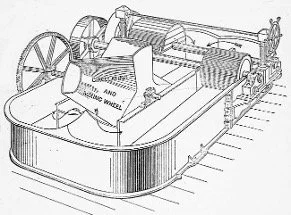
A Hollander beating machine
Although the accident described in The Papermaker’s Daughter did not happen at Buckland Mill, there was a fatal accident which took place there in 1895. A nineteen-year-old man, Alfred Best Ayers, was killed when his head got caught in a drying machine. The following is a report from the local newspaper:
31 May 1895 - TERRIBLE ACCIDENT AT BUCKLAND PAPER MILLS - A YOUNG MAN KILLED - Yesterday morning at Messers. Wiggins, Teape and Co's Paper Mills, Buckland, about six o'clock, just at the finish of the night shift a young man named Alfred Best Ayers met with a fatal accident. He was working in the drying room, and it is stated that the sheet of paper on the drums having broken, he was attending to it, when by some means he got his head in between the large open drums, and his head was squeezed just above each temple. He made no cry, and the rush of blood from his ears and nostrils showed the injuries were fatal. Dr Long was immediately sent for, and he promptly arrived and pronounced life extinct. The body was removed to the mortuary by the police, and afterwards taken to the deceased's home at 12 Pleasant-row, Durham Hill where it awaits the inquest, which will be held at the town hall this afternoon at three o'clock. The unfortunate young fellow was 19 years and 3 months old.
The coroner’s inquest reached a verdict of accidental death. If you have read The Papermaker’s Daughter you will know that another tragic incident occurs at the mill for which the coroner reaches a verdict of accidental death, but I am not going to reveal that one here.
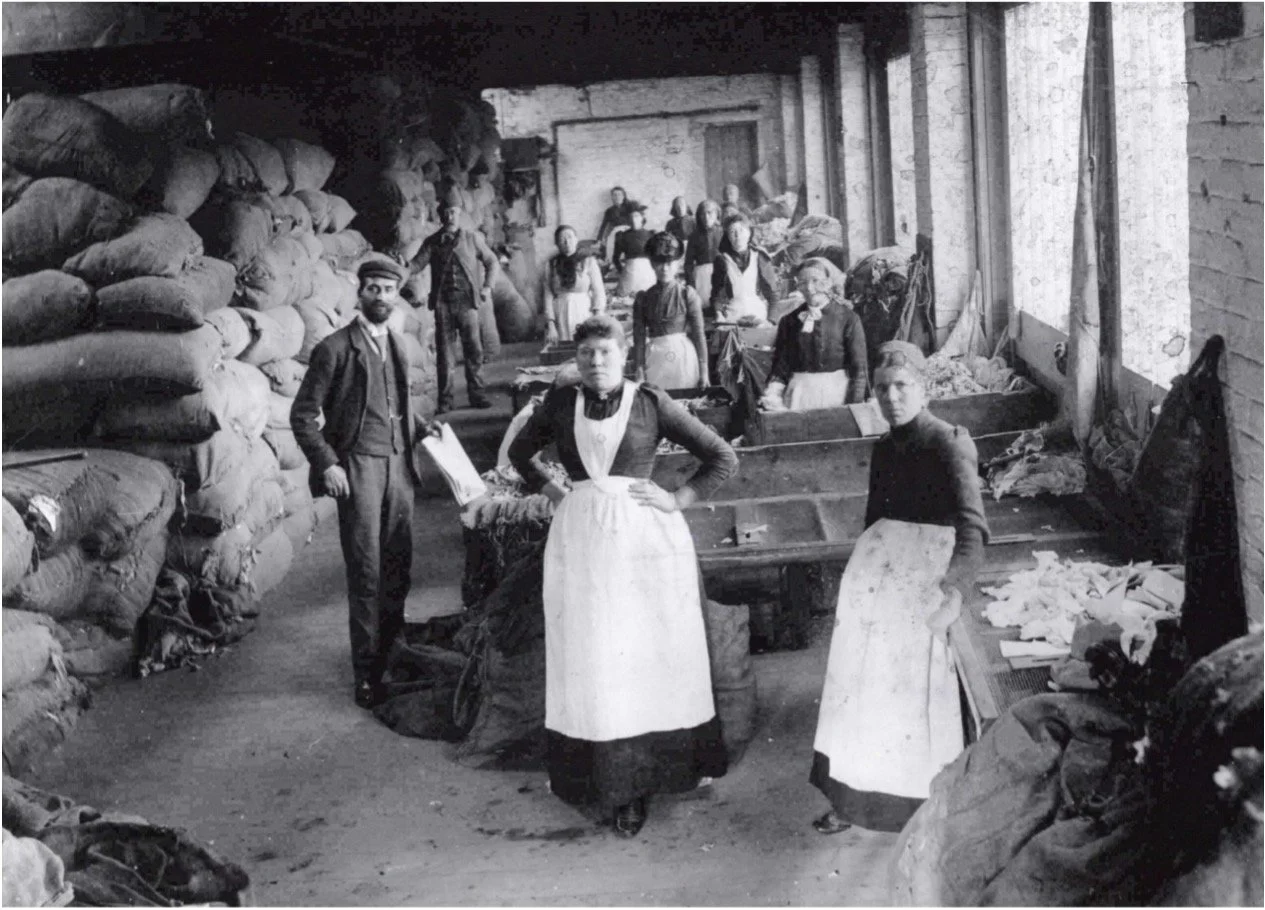
Rag sorters at Buckland Mill 1897
The End of an Era
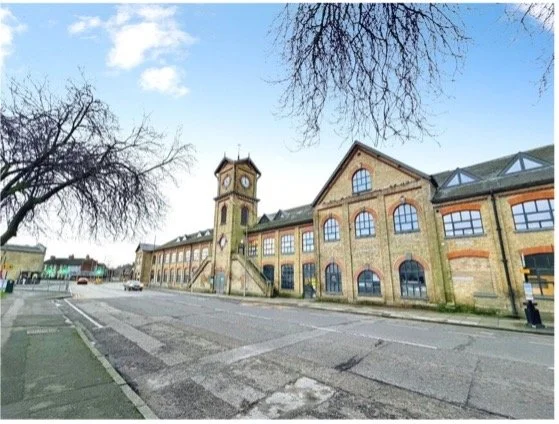
Buckland Mill, Dover
Buckland Mill was bought by Wiggins Teape in 1890 for £20,000, and they remained its owners until its closure. By 1998 it was producing 27, 500 tons of paper annually. It closed in June 2000, thus ending papermaking in Dover. The original building can still be seen, now converted into housing.
Sources:
The History of Papermaking Part II by Dominic Irons / Ferrotype
The Dover Historian - A collection of historical articles from the town of Dover, England, by Lorraine Sencicle
https://www.britannica.com/technology/papermaking
https://vintagepaper.co/blogs/news/rag-paper-what-is-it
http://www.bucklandmill.altervista.org/
Related blog posts